Pair-Flipping Underwater
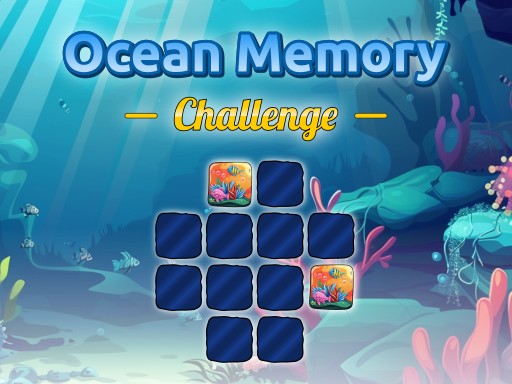
Marine Memory Puzzle Game turns the classic concentration format into a calm ocean-themed exercise. You flip two cards per turn, aiming to reveal matching images of sea creatures, corals, or treasure items. A correct pair stays face-up; a mismatch flips back after a brief pause. The board clears once every pair is found. Because each round shuffles the card positions, you cannot rely on memorized layouts, only on your recall of what you have already seen. The game tracks your move count, giving you a simple efficiency score to beat.
Difficulty That Scales
The game offers multiple difficulty levels, which typically change the grid size or the number of pairs. Beginners can start with a small board and gradually work up to larger layouts that demand stronger short-term memory and sustained focus. This progression means the same core mechanic stays challenging without adding new rules. You choose the pace: a quick easy round or a longer, more demanding session. The difficulty options also make it easy to include younger players or to play cooperatively, taking turns and discussing which cards to flip.
Atmosphere and Accessibility
Vibrant graphics and calming underwater sounds set a relaxed tone. The marine imagery is not just decoration—it gives each card a distinct visual identity, which helps you build mental associations as you play. Controls are simple: tap or click a card to flip it. No prior memory-game experience is needed. The game is designed for solo play or group sessions, and the content is appropriate for all ages. Progress is measured by moves taken, so you can monitor improvement over time without pressure.
Practical Memory Strategies
To play efficiently, focus on one section of the board at a time and build a mental map of where specific images are. Say the card names silently as you flip them to reinforce recall. Resist rushing; accuracy beats speed, especially on larger grids. Start with easier levels to learn the card set, then move up when you can clear a board in fewer moves. Regular short sessions tend to be more effective than long, frustrated ones.
Compatibility
Play on Any Device | Chrome / Safari / Edge Recommended



Editorial Notes