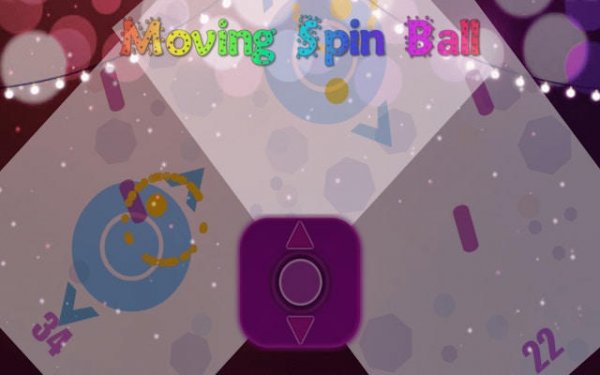
Spin Track Precision Puzzle strips its design down to one tense action: rotating the track to steer an automatically moving sphere past sliding and rotating barriers. The risk-reward pull of glowing orbs adds a second layer of decision-making. Its gradual difficulty curve suits players who enjoy precision timing and quick restarts, though anyone seeking varied level themes or direct character control may find the single mechanic limiting.
In Spin Track Precision Puzzle, you do not control the sphere directly. It rolls forward on its own along a visible track. Your only input is rotating the path itself. That single action changes the sphere's direction, so every turn is a timing decision. Rotate too early or too late and the sphere meets a barrier, ending the run immediately.
Obstacles are not fixed. Some slide horizontally across the track; others rotate in place or appear in sequences that demand quick reactions. As you progress, these patterns grow more complex and faster, occupying tighter spaces. Each new stretch of track combines barrier types in fresh ways, so the challenge keeps changing rather than repeating.
Glowing yellow orbs sit along the track. Collecting them adds to your score, but many are placed where reaching them means a slight detour or a precise rotation. You weigh the points against the chance of clipping a barrier. Longer runs naturally offer more orb opportunities, so survival and collection feed into the same score.
The visual style is minimal: distinct colors separate the track, sphere, and obstacles so you can read the situation at a glance. Orbs trigger a brief visual and audio cue when collected. Collisions are shown clearly, often by the sphere stopping or a screen flash. That immediate feedback tells you exactly what went wrong without guesswork.
There are no traditional themed levels. Difficulty rises gradually as you travel farther. Early sections have wide paths and slow barriers, giving you room to learn the rotation controls. Later, barriers move faster, appear in greater numbers, and leave less space. The curve stays steady, so improvement comes from your own performance rather than sudden spikes.
Sign in to comment
You must be logged in before posting a review or rating.
No comments yet. Be the first to comment!




Editorial Notes