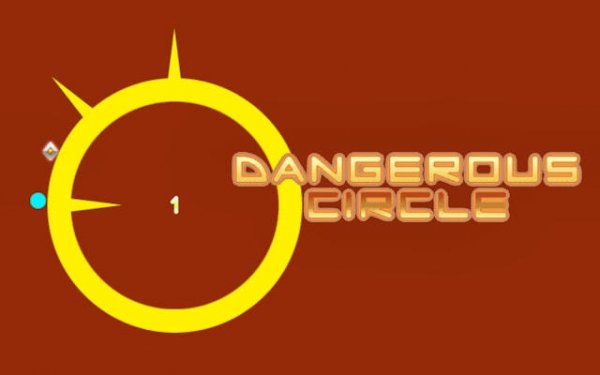
Circle Reflex Arcade Game keeps its scope tight: one ball, one circular arena, and moving obstacles that end the run on contact. That simplicity works in its favor, because the challenge comes from reading bounce angles and deciding when a redirect is safe. The dynamic obstacle patterns give each session a different shape, and the curved walls add a layer of spatial thinking that straight-edged arenas lack. It suits players who want quick reflex tests without a learning curve, though anyone seeking progression systems or varied modes will find the experience limited to survival scoring.
Circle Reflex Arcade Game puts one action at the center of every run: clicking or tapping the screen to change the ball's bounce direction. Each click sends the ball away from the cursor position, so the input is less about aiming at a target and more about nudging the ball toward open space. Because the ball never stops moving on its own, players are constantly reading the arena and deciding when a redirect is worth the risk.
Obstacles move inside the circular arena, and their paths change from session to session. The circle itself matters too: curved walls produce bounce angles that differ from straight-edged arenas, so the ball can ricochet into unexpected lanes. Using the walls deliberately helps players reposition the ball without spending a click, but a careless bounce can also send it straight toward an obstacle. Recognizing a pattern early gives players more time to plan the next two or three bounces.
Score is tied directly to survival time. The longer the ball stays in play without touching an obstacle, the higher the score climbs. There are no complicated tutorials or setup screens, so a run begins almost immediately. As sessions progress, the combination of faster reactions and shifting obstacle layouts raises the demand on reflexes and spatial judgment rather than adding new buttons or rules.
The one-click control scheme keeps the game approachable for casual players and younger audiences, while the need for precise timing gives experienced arcade players something to chase. Short sessions make it easy to fit between other tasks, and the changing obstacle patterns give each attempt a different feel. Players who enjoy physics-driven ball games and quick reflex tests will find the most to like here.
Sign in to comment
You must be logged in before posting a review or rating.
No comments yet. Be the first to comment!



Editorial Notes