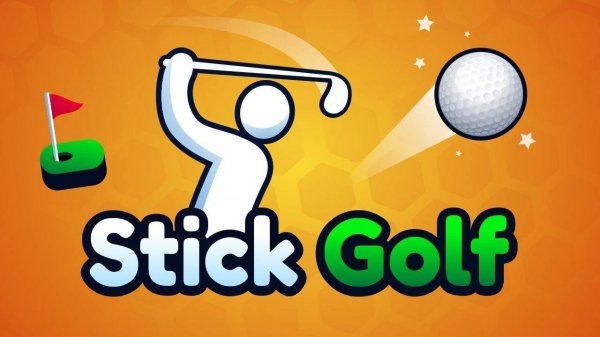
Putt Path Puzzle Golf trades twitch reflexes for careful observation. The aim-and-power system is simple enough for newcomers, yet later holes add bunkers, water, and slopes that reward planning. Cosmetic hats and optional score chasing give light long-term goals without pressure. Its main limitation is that the core loop stays deliberately gentle, so players seeking fast action may find it too slow.
Every hole in Putt Path Puzzle Golf starts with observation rather than action. Early layouts are flat and open, which lets new players learn how aim and power interact without punishing mistakes. Later holes add sand bunkers and water hazards, so the real task becomes planning a route that avoids them. The challenge is not speed but reading the green and choosing a line that keeps the ball safe.
Controls stay deliberately simple. You set direction by dragging or pointing, then adjust swing strength with a slider or tap-based meter. Releasing the input sends the ball rolling along the chosen line. Feedback is immediate, so the connection between your input and the result is easy to understand. That keeps attention on strategy instead of complex button combinations.
Completing a hole awards coins that can be spent in the in-game shop. The shop sells cosmetic items such as top hats, pirate hats, and bunny hats for the stick figure golfer. These change appearance only and do not affect gameplay. You can revisit any previously unlocked course to chase a better score, which encourages gradual improvement through repetition.
Soft background music and a gentle visual style keep the mood consistent. There are no timers, countdowns, or pressure to perform quickly, so sessions can be short breaks or longer relaxed play. The content is appropriate for children and adults, with no violent or inappropriate elements. An intuitive tutorial guides new players through the basics, so anyone can start within minutes.
Initial holes are easy to complete, but later courses introduce more complex arrangements that reward careful planning. You must consider the ball's trajectory, the effect of slopes, and the placement of hazards. Replaying a course to achieve a lower score becomes a puzzle in itself. The difficulty rises gradually, offering a gentle learning curve rather than a steep challenge.
Sign in to comment
You must be logged in before posting a review or rating.
No comments yet. Be the first to comment!






Editorial Notes