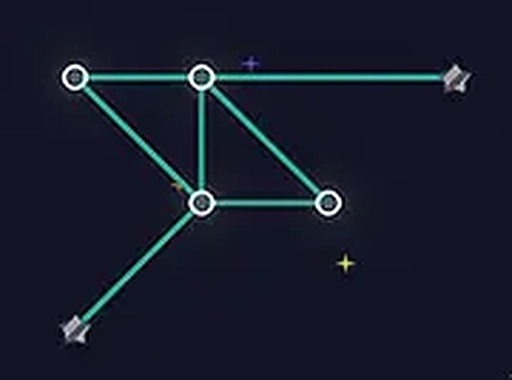
Constellation Connect Logic is a minimalist puzzle game about pulling celestial nodes together by clicking junction points. Its strength is the way a single action changes several elements at once, turning each move into a small spatial planning problem. The clean visuals and lack of time pressure make it easy to pick up, while the chain-reaction nature of the pulls gives experienced puzzle players something to think about. It runs in a browser with no setup, though it is best suited to desktop play with a mouse or keyboard.
Every puzzle in Constellation Connect Logic revolves around a single action: clicking a junction point. That click pulls adjacent celestial nodes toward the junction, changing the layout of the board. The goal is not just to move nodes but to arrange their paths so they meet and combine. Because one click affects several nodes at once, each move reshapes the board in ways that demand attention.
This is not a reaction-based game. Success comes from reading the current configuration and predicting how nodes will shift after your next click. A single pull can trigger a chain of movements, so thinking several steps ahead matters more than clicking quickly. There is no timer or penalty for taking your time, which encourages experimentation and careful sequencing.
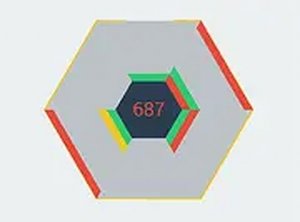
The interface uses a plain backdrop and simple shapes. That minimalism is functional: with fewer visual distractions, it becomes easier to track how each node moves and how the board changes after every action. Menus are kept out of the way, and the screen stays uncluttered, so the spatial relationships between nodes remain the main thing you see.
Constellation Connect Logic runs in any modern browser. There is no installation and no account creation. It is designed for desktop computers with a mouse or keyboard, and a full-screen option is available if you want a larger view. The controls are simple enough for a first-time player, while the underlying logic offers enough depth for experienced puzzle fans.
Early attempts often involve trial and error. Over time, repeated play makes the interaction between nodes easier to read, and you start to recognize effective sequences. Because there is no time pressure, you can test ideas freely. That gradual learning curve suits both short mental breaks and longer sessions spent refining your approach to tougher configurations.
Sign in to comment
You must be logged in before posting a review or rating.
No comments yet. Be the first to comment!




Editorial Notes