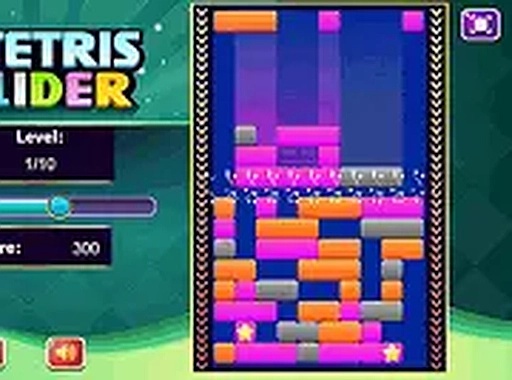
Grid Slide Logic Puzzle strips block puzzles down to a single meaningful action: sliding pieces into empty cells. That constraint creates genuine strategic depth, because every move reshapes the board and gaps are hard to repair later. The clean presentation and lack of timers suit players who prefer thinking ahead to reacting quickly. The main limitation is that the input describes no multiplayer, story, or meta-progression, so anyone seeking those features may find the scope narrow.
Grid Slide Logic Puzzle takes the familiar block-matching formula and removes rotation entirely. Your only move is to drag a block with a mouse or finger into an adjacent empty cell. Rows clear when filled, and new blocks enter from below, gradually raising the stack. The game ends when the pile reaches the top. Because every shift changes the board layout, you must think several moves ahead rather than react quickly.
Success depends on keeping a flat surface. Gaps in rows become hard to fill later, so clearing complete lines promptly usually beats stockpiling pieces. The sliding mechanic lets you reposition blocks into more favorable spots; for example, nudging a piece to the edge of a row can open space for another. Pattern recognition improves with practice, and rushed moves tend to create the gaps that end a run.
Interaction is straightforward: drag a block to an adjacent empty cell. The interface responds on desktop browsers and mobile touchscreens, and no download or installation is required. A full-screen option is available for an uninterrupted view. The simple controls mean anyone can start within seconds, while the underlying strategy offers depth for experienced puzzle players. Difficulty rises as the board fills faster, but there are no timers or pressure mechanics, so you can proceed at your own pace.
The visual design is clean and uncluttered. Block colors are distinct, the grid is clearly defined, and animations are smooth without being distracting. Sound effects are minimal, providing gentle feedback for completed rows. This restrained approach suits the game's relaxed pace and keeps attention on the puzzle itself. A round might last only a few minutes, making the game convenient for short breaks, while the escalating difficulty supports longer sessions.
Sign in to comment
You must be logged in before posting a review or rating.
No comments yet. Be the first to comment!



Editorial Notes