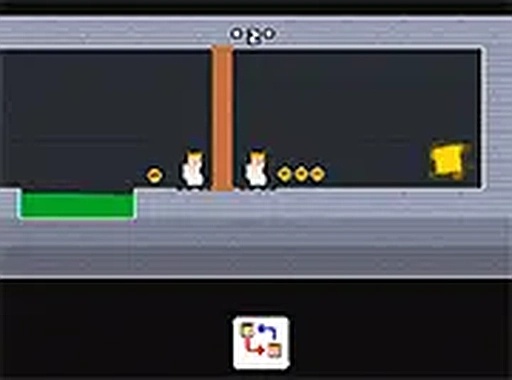
Palace Plumbers Platform Quest fits teams who want a low-pressure platformer built around talking through each stage. The double jump, moving hazards, and coin placements create small cooperative puzzles rather than reflex tests, and the lack of a timer keeps the pace relaxed. Its simple controls and bright presentation suit family play. The main limitation is that the design assumes two players, so anyone looking for a solo platformer will find the core loop mismatched.
Palace Plumbers Platform Quest is built around a single idea: two players share one side-scrolling stage and must reach the exit together. Each level strings together platforms, gaps, and moving obstacles, and the double jump is the main tool for crossing wider spaces or climbing to higher ledges. Coins sit in spots that often demand cooperation rather than solo speed. A typical moment has one player drawing a hazard's attention while the other slips past to grab a coin. The game rewards talking through a plan before moving, not racing ahead.
Early levels keep things readable with simple gaps and low platforms. Later stages add moving blocks and timed hazards that force players to wait for the right window. Some coin clusters are placed so that only a precise double jump reaches them. Pits appear at regular intervals, and falling sends a player back to the last safe spot rather than ending the run. Each stage plays like a short puzzle that two people solve together, and repeating an attempt is expected while the timing of each obstacle gets learned.
The game runs on keyboard and touchscreen. On desktop, arrow keys or WASD move the character and a dedicated button jumps; pressing jump twice in quick succession triggers the double jump. Mobile players use on-screen buttons that respond to taps. There is no combo system or inventory to track, so attention stays on movement and coordination. That simplicity makes the game easy to hand to younger players or anyone new to platformers, and the two-player requirement means it works best as a shared-screen activity.
Finishing a level means both players reach the exit. If one falls, they respawn and continue, but coins lost during that attempt stay lost. That rule creates a mild reason to improve without punishing mistakes harshly. Levels can be replayed at any time to chase a higher coin total, and there is no timer, so a team can take as long as it needs. Different routes and jump timings are worth testing on a second pass, which is where the game's cooperative depth shows up.
Sign in to comment
You must be logged in before posting a review or rating.
No comments yet. Be the first to comment!







Editorial Notes