
Chu Choo Cake Train Delivery Puzzle mixes light action with deliberate route planning. The baker pig's cake-walking mechanic and the need to avoid roaming mice create levels that reward patience over speed. The blue mouse adds a distinct timing challenge. Players who enjoy casual puzzles with moving hazards will find the gradual difficulty curve approachable, though the reliance on observation may frustrate those expecting fast reflexes.
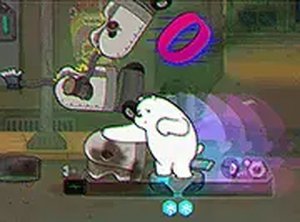
Each kitchen board functions as a puzzle grid where the baker pig steps onto cakes to pick them up, then carries them to the train chute for drop-off. The objective is straightforward: collect every cake without touching a mouse. Because cakes occupy fixed positions and the pig can only hold what it picks up along its route, players must decide the order of collection and the path between each cake and the chute. This turns every level into a route-planning exercise where a single misstep can end the attempt.
Mice roam the board continuously, and their movement patterns determine which paths are safe at any given moment. Touching a mouse immediately ends the current attempt, so observation comes before action. Most mice move at a predictable pace, but the blue mouse is notably faster and demands extra caution. Its speed compresses the safe windows for crossing its path, forcing players to either wait for it to pass or choose an entirely different route. The combination of fixed cake positions and moving hazards creates a dynamic obstacle course that changes as the level progresses.
Later boards introduce new layouts and additional mice, gradually increasing the complexity of route planning. Early levels typically offer wider safe zones and fewer patrols, allowing players to learn the cake-walking mechanic without immediate pressure. As more mice appear, the safe corridors narrow and the timing windows shrink. The blue mouse may appear alongside regular mice, layering speed differences that require separate timing considerations for each threat. This gradual escalation keeps the challenge accessible while still testing observation and patience.
Rushing rarely works. The most reliable approach is to watch mouse movements for a few seconds before moving, identify a path that collects multiple cakes in one trip, and use corners or safe zones to pause and reassess. Giving the blue mouse extra space and learning its pattern separately from the slower mice reduces unnecessary risk. Because each level is a self-contained puzzle, repeating an attempt to learn timing and routes is part of the intended experience. Patience and careful observation matter more than reflexes.
Sign in to comment
You must be logged in before posting a review or rating.
No comments yet. Be the first to comment!





Editorial Notes