
Stickman Rescue Puzzle Game succeeds because it knows what it is: a compact arcade puzzle built on physics obstacles and timing. The stick-figure presentation removes distraction, and the level-by-level structure lets players learn from failure without penalty. It suits patient thinkers who enjoy retrying a stage until the sequence clicks. The main limitation is variety, since the core loop stays consistent across levels; players wanting story or progression systems will not find them here.
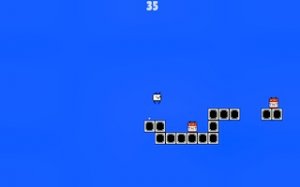
Every level in Stickman Rescue Puzzle Game sets the same basic task: get the stickman from a starting point to a designated goal area. What changes is the route. Moving platforms, swinging hazards, and unstable structures block the way, so the challenge is less about reflexes alone and more about reading the layout before acting.
Depending on the level design, players either control the stickman directly or interact with the environment around it. That split matters. Some puzzles reward a well-timed jump or step; others require triggering or avoiding objects so the path becomes safe. Success comes from analyzing the puzzle, planning a sequence of actions, and executing that plan with precise timing.
The game openly encourages trial and error. A failed attempt is not wasted time; it reveals how an obstacle moves, how long a gap stays open, or where an unstable structure gives way. Players who treat each retry as information rather than punishment tend to refine their strategy faster than those who rush the first move.
Controls are intuitive, so the barrier to entry stays low. Complexity comes from the obstacles themselves, which can introduce new types and greater difficulty as levels progress. Simple stick-figure graphics keep attention on the puzzle mechanics rather than visual noise. The result suits players who want a mental workout with an action-timing edge, and it remains accessible across ages because the theme and presentation stay uncluttered.
Sign in to comment
You must be logged in before posting a review or rating.
No comments yet. Be the first to comment!







Editorial Notes