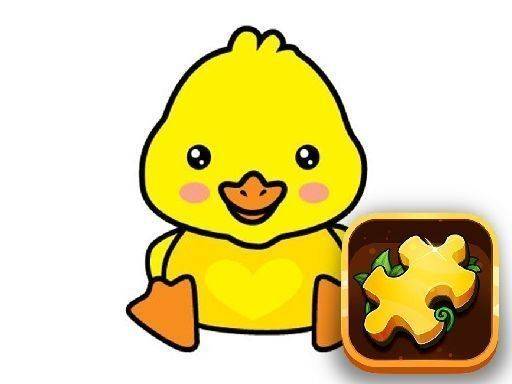
Duck Puzzle Challenge delivers exactly what its name suggests: a straightforward jigsaw experience with duck pictures. The lack of timers and the availability of hints make it welcoming for children and adults who want to unwind. The main limitation is that the input does not describe advanced features like difficulty settings or multiplayer, so it is best suited for solo, relaxed play rather than competitive puzzling.
Duck Puzzle Challenge is built around a simple, familiar task: placing jigsaw pieces into their correct positions to form a complete picture of ducks. Each puzzle is a static image broken into smaller parts, and your only job is to drag each piece to the right spot. There is no timer, no move counter, and no penalty for taking a long time. The challenge comes entirely from matching shapes and colors by eye.
You begin with a board showing empty slots and a set of scattered pieces. By looking at the contours of each piece and the colors on its surface, you decide where it belongs. The game allows you to drag and drop pieces freely, so you can experiment without risk. If a piece does not fit, you simply move it elsewhere. When you place a piece correctly, it locks into the picture. Completing every slot finishes the puzzle and opens the next duck scene. [IMG_1]
For players who get stuck, a hint feature is available. It helps you locate a correct placement without solving the whole puzzle for you. The controls are designed to be intuitive enough for young children, and the absence of time pressure means no one has to rush. This makes the game approachable for families, casual players, and anyone looking for a low-stress activity.
The graphics are bright and cheerful, with each puzzle showing a different duck scene. The overall tone is calm and friendly, matching the relaxed pace. Because there are multiple puzzles, you can move from one image to the next at your own speed. The game does not push you to finish quickly or compete with others. [IMG_2]
Sorting pieces by color or edge shape before placing them can make the picture easier to read. Using hints only when you are genuinely stuck keeps the puzzle satisfying. Taking your time and enjoying the process tends to work better than rushing. Regular play may help improve pattern recognition and concentration over time, though the game itself never demands speed or precision under pressure.
Sign in to comment
You must be logged in before posting a review or rating.
No comments yet. Be the first to comment!



Editorial Notes