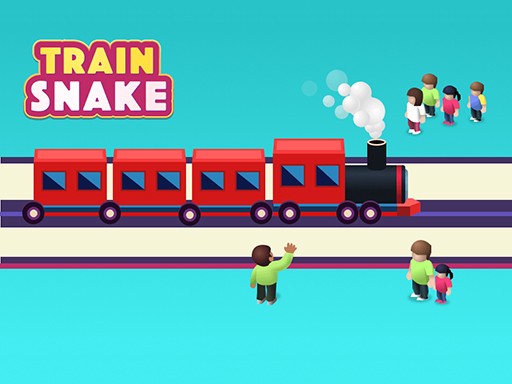
Train Passenger Pickup Puzzle works because its central constraint—the train grows with every passenger—turns simple movement into a routing problem. Early levels teach the rhythm; later ones punish careless turns. The family-friendly design and simple controls lower the entry barrier, but the strategic depth of ordering pickups keeps experienced players engaged. It is best suited to players who enjoy logic puzzles with a real-time arcade pace.
You control a train that never stops moving. Directional inputs—arrow keys or swipe gestures—steer it around each level. The goal is to pick up every waiting passenger before reaching the endpoint. Colliding with barriers or roadblocks ends the attempt immediately. Because the train moves continuously, every turn must be planned before you commit to it.
Each passenger you collect extends the train's length. A longer train is harder to maneuver through tight spaces, so the order in which you collect passengers matters. Grabbing easy pickups early can leave you with a cumbersome train when navigating narrow corridors later. Efficient routing means thinking several moves ahead, similar to classic snake-style games but with a fixed endpoint rather than an endless survival format.
Levels introduce new obstacle patterns and passenger placements as you progress. Early stages offer open layouts with few hazards, letting you learn the movement rhythm. Later stages tighten corridors, add more barriers, and position passengers in sequences that punish backtracking. The difficulty curve is gradual, so beginners can learn the basics while experienced players still find levels that demand precise timing and route optimization.
The game contains no violent or inappropriate content, making it suitable for children and adults. Its controls are simple enough for younger players, but the growing-train mechanic adds a layer of strategic planning that keeps it engaging for older puzzle fans. The arcade structure encourages repeated attempts to improve efficiency and complete levels more consistently.
Sign in to comment
You must be logged in before posting a review or rating.
No comments yet. Be the first to comment!











Editorial Notes